A new day, new week, new month or new Year are wonderful reminders of God’s goodness and mercy.
Each New Year offers time to reflect and to move forward in God’s purpose and promises in your life. The past year may have brought plenty of unexpected challenges for you, but the beginning of a new year offers renewed hope and commitment.
You can look forward to the coming year as you recall God’s love and faithfulness and instead of focusing solely on resolutions, focus on your relationship with God and your resolutions will be sorted.
If you want to build strength, improve your overall fitness, and prevent injuries, then you should focus on muscle recovery. It can be tempting to overtrain at times, in the hope of fast-tracking growth.
But rest is absolutely necessary, allowing muscles to repair the microscopic tears that are caused by exercise, and this will result in stronger, more resilient muscles. Knowing how to recover your muscles the best way can provide the best results, so this post is here to help.
In this post, you will learn of the three key methods to maximize muscle growth; all of which are tailored to those who enjoy physical activity.
Incorporate Active Recovery
Although some people will think letting their bodies recover requires complete rest, which is known as passive recovery, this is not the case. In fact, removing movement from your workout routine with the aim of recovering can lead to muscle stiffness and other issues. This is why active recovery is preferred by many, as it can prevent injuries and reduce muscle soreness.
However, ensuring you incorporate active recovery correctly is important. It can be tempting to push your body further at times, but this must be avoided. Instead, active recovery will see you engage in low-intensity physical activity, like walking or swimming, to help your muscles mend more effectively.
One way to do this is through Zone 2 training. Zone 2 training should involve exercising at a low-to-moderate intensity, roughly 60%-70% of your maximum heart rate. This can be incorporated into rest days to increase blood flow and oxygen delivery to muscles, and this is crucial to remove metabolic waste and facilitate muscle repair. The benefits of Zone 2 training don’t end there, though, as it can also enhance athletic performance and improve endurance capacity.
Fuel Your Muscles
The right food is important in many aspects of life, and muscle recovery is no different. It is vital to fuel your muscles, especially after exercise. With proper nutrition, your body receives the building blocks and energy needed to reduce inflammation, repair muscle damage, and replenish glycogen stores. All of this can lead to faster recovery.
There are key nutrients that are required for effective muscle recovery – carbs, healthy fats, and protein. Carbs, or carbohydrates, are needed to refill glycogen stores and assist protein absorption. Healthy fats, like fatty fish and nuts, help to reduce inflammation and can contribute to overall recovery. Protein is crucial to repairing muscle tissue, and it is advised to consume 20g-30g of protein in a post-workout meal.
Prioritize Sleep
As you sleep, your body works to repair itself. This means your body is rebuilding muscle tissue, releasing growth hormones, and restoring energy. If you do not get enough sleep, then these processes can be hindered, which could impact muscle growth and overall recovery. To ensure your muscles, and the rest of your body, recovers well, you must get enough sleep.
Making high-quality sleep a priority for your health includes aiming for seven to nine hours of sleep per night. This can be achieved by establishing a consistent sleep schedule and optimizing your sleep environment. Doing this will help you achieve restful and uninterrupted sleep.
To conclude, there are multiple ways to maximize muscle recovery, with this post listing three of the key methods. These steps are essential to complete to ensure your body remains healthy and capable of regular exercise.
Cooking in the kitchen can be an enjoyable experience for many people. For some, it is an opportunity to destress after a long day at work, while it can be the reason behind their stress for others. Not only that, but your cooking experience will also depend on how prepared you are.
The best way to be prepared and safe is to follow a certain criterion to ensure the meals made are high-quality. This will include understanding the most common cooking hazards that can occur in the kitchen. Luckily, this post lists three of them below as well as how to prevent them from happening.
Knife Injuries
One of the most common injuries to occur in the kitchen is related to knives. In fact, according to Beaumont Emergency Hospital, roughly 350,000 Americans are injured by kitchen knives annually. Although people might imagine that many of these will relate to slips or other accidents, knife injuries can actually happen a lot easier.
Blunt knives are often more dangerous than sharp knives. This is because they require lots more pressure to cut through meats and vegetables, and this pressure can lead to accidents where the individual injures themselves or someone close by. A sharp kitchen knife will cut through foods and ingredients with ease, making the cooking experience much more convenient and enjoyable.
To avoid knife injuries from happening in your kitchen, you should ensure knives are cleaned and stored appropriately to prevent damage. It is also wise to invest in a knife sharpener to maintain your kitchen knives properly and keep their edges honed.
Cross-Contamination
Another common cooking hazard that can come from the kitchen is cross-contamination. Cross-contamination is the spread of harmful bacteria from raw food to other foods, equipment, and surfaces, which can lead to food poisoning. Raw foods, such as meat, poultry, and seafood, can carry bacteria like E. coli and Salmonella. These bacteria can be transferred and cause illness if they come into contact with ready-to-eat foods, surfaces, and utensils.
Practicing good hygiene is necessary to prevent this. The sources of cross-contamination, such as chopping boards, knives, and hands, should be cleaned properly after handling raw food. It is also important to separate raw and cooked foods throughout the kitchen, including in the refrigerator, and wipe down all surfaces thoroughly. Not doing this could increase the risk of food poisoning, and this can range from mild to severe sickness. It is thought that roughly 9.9 million Americans get sick from a foodborne illness each year.
Grease Buildup
The third and final cooking hazard on this list is grease buildup. This might sound like a small issue, but grease can be highly flammable and can ignite at relatively low temperatures. Grease can accumulate in exhaust hoods, ventilation systems, and other kitchen areas, and this could ignite and cause a fire at some point.
There are other hazards associated with grease buildup in the kitchen. Due to the smell, grease buildup can attract rodents and other pests. Following the scent, these pests view the buildup as a direct food source. This is a serious health risk, too, due to the diseases rodents carry, like hantavirus and leptospirosis. To conclude, there are multiple hazards that can occur when cooking, and the three listed above are some of the most common. Cooking can be a dangerous experience, so it is essential to maintain a clean kitchen.
More times than we can count, we feel let down, disappointed and even hurt when our expectations are not met by others. It is so normal to have expectations from people around us. If you work, you expect to be paid by your employer. If you are in a relationship, you expect to be treated right by your partner and the list goes on.
However, over the years, I have learnt to curb my expectations from others and thereby minimize the level of disappointments that I experience. Just as we can’t expect our jobs to meet all our needs – financially, socially, emotionally, etc., especially when the take-home from certain jobs barely gets you to the bus-stop, we can’t look to others – like our partners – to fix all our problems as individuals.
That is too much responsibility to place on someone’s shoulders and a major set up for a letdown. Of course, this is not an attempt to let people off from being accountable and responsible. Naturally, there’s a minimum expectancy that comes with whatever role someone plays in your life without wanting them to assume a God role for you, because as humans, that is IMPOSSIBLE.
Just so you know, those gaps in us that can’t be filled by anyone can only be filled by The Divine. Once you understand this, you will stop beating yourself and others up, for falling short of certain expectations. Understanding this ensures that your demands are realistic and balanced. Above all else, you protect your mental health.
I stumbled across an old photo taken on a holiday trip to Strasbourg in 2000 and did a double take. Me. Younger of course. More energetic and much slimmer without putting in any effort. Twenty plus odd years ago, I never thought I would have to fight middle-age spread with gusto, come to think of it, in my teens and twenties, I truly never gave much thought to what older adulting entailed. I just lived life as it was, somewhat through rose-colored spectacles and very high expectations from life. Oh well!
Fast forward to present. I have hit the older lady age and it’s been a struggle to maintain a healthier body weight and lifestyle. Doing so is absolutely important, as it helps to keep many ailments at bay. The quest to lose the excess pounds has been an uphill task for me especially as it appears that just passing the confectionary aisle whilst shopping causes my scale to wince from extra pounds gained just by looking at cakes and cookies, coupled with the fact that some body parts are no longer as efficient as before.
To my surprise, keeping my balance has surreptitiously become a concern. It seems like I have unlocked a new fear; the fear of falling down and breaking something. This phenomenon started after my bout with plantar fasciitis 2 years ago, which thankfully, I’ve defeated through various lifestyle changes and losing over 10kg. However, one of the outcomes of this experience is that nowadays, I always think carefully about footwears that I purchase and how to pair them with my outfit before stepping out of the house.
Although I fancy thinking of myself as a fashionable lady, when it comes to my shoes, I truly have to consider not only what is suitable for the occasion but also its comfortability. At this point in time, as much as I admire those strutting around in heels and would love to do same every given moment, there’s no sense in me perching on stilettos and then hobbling back home with broken toes.
One thing I can say for sure, as a fashion enthusiast, I am never ever going to let myself fall to bits. No matter how old and wrinkly I grow, so long as I have my faculties ticking along, I will always do my best to look well put together. The teens and twenties were surely wonderful, but there’s a whole lot of magical years ahead and I will move with the times, creating my own rhythm and new balance.
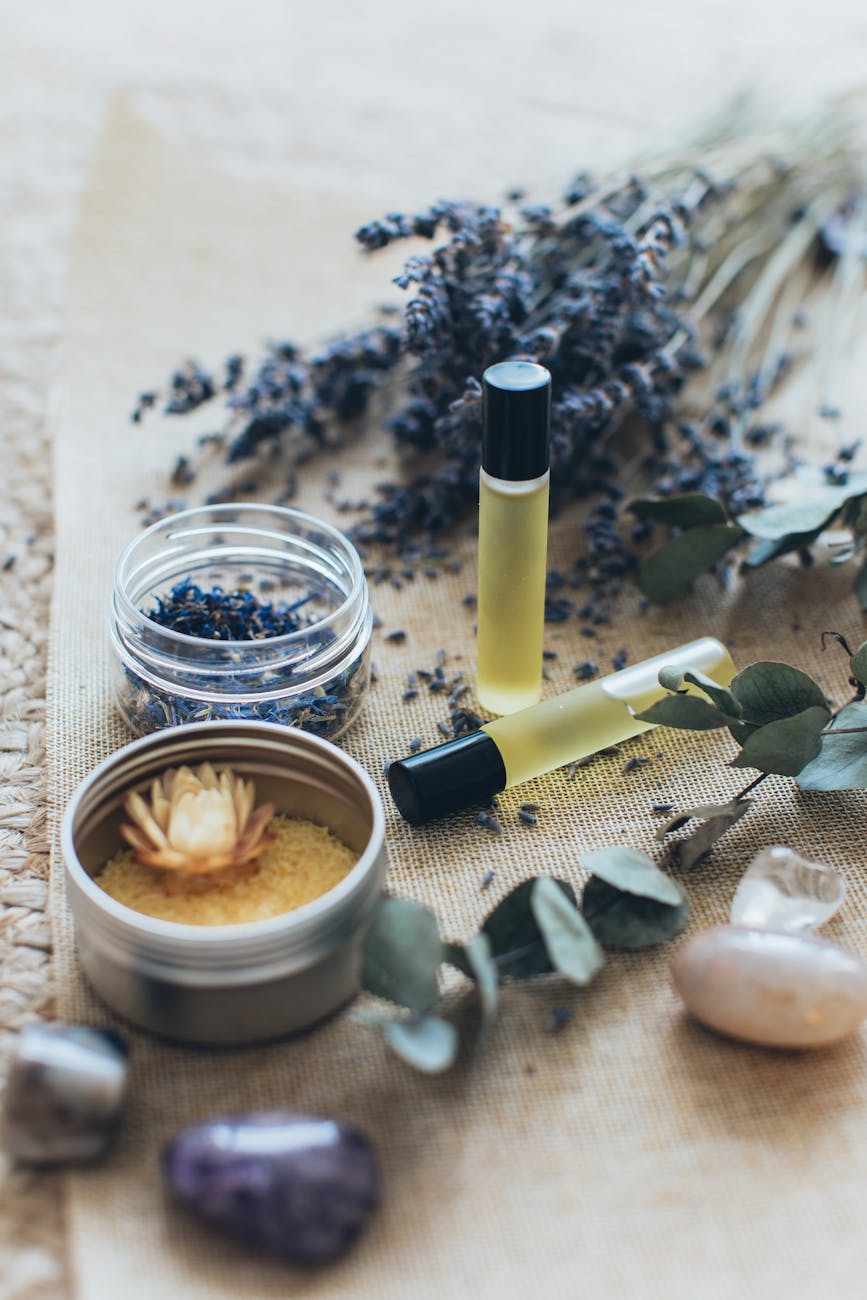
It seems that I have developed an interest to gain an in-depth understanding of herbs and their functions, though I believe that this interest has always been there but was lying fallow somewhere in the recesses of my mind.
Now and again, the desire to start the journey into the jungle of herbs and its usage briefly bubbles to the surface and I picture myself standing before a steamy cauldron of nose tingling mixture, dishing out timeless wisdom of the ages.
I can still recall the voluminous black and yellow book ‘Where there is no doctor’ that sat on my parents’ bookshelf for ever and by the way, still sits there. As a young girl, I thumbed through that book uncountable times and marveled at how people knew what to do for different ailments etc.
Was that a cue that I should have dabbled into medicine and pharmacology? Not sure, just a side thought. My mother used to prepare many concoctions and what not from plants gathered from her garden and foraged around us and they worked.
Till date, when having a conversation with my mama and I complain of anything, she will say, ‘ah, have you tried turmeric, or ginger, or milk thistle or this and that,’ and her recommendations are always quite helpful.
Incidentally, we have forebears who were medicine men/women who knew both the good, the bad and the ugly sides of plants. I vividly recall the night I was stung by a scorpion on my left foot whilst we played outside, the horrible pain that shot up my leg seared itself into my memory. I can vividly recall the swift manner in which my aunt swung into action to take care of me.
My left thigh was bound tightly with a belt, an action taken to stop the scorpion’s venom from spreading. I was given a fat ball of raw onion to chew on whilst my aunt with the precision of a surgeon made an incision in the area where I was stung with a blade and applied some black poultice to that spot.
I felt the painful extraction of the venom by this marvelous black thingy and after the arduous process of sucking out the venom, she dropped the black mass into a bowl of evaporated milk and a yellowish liquid oozed out of it. By the following morning, I was as right as rain.
Unfortunately, most of these relatives passed on without getting their rich knowledge documented. Now that I think of it, I think it is kind of sad that in the bid to embrace Western ways, it seems like we have left valuable parts of our culture behind.
Anyways, back to my awakened desire to delve into herbalism especially stoked by the fact that as I grow older, my body keeps speaking foreign languages to me. I have been researching and reading lots of articles – it seems overwhelming, and I don’t even know which end of the stick to hold.
I plan to take short, affordable courses to enrich my learning and my life. I wonder where the journey will take me, but I doubt very much if I will be reading tea leaves anytime soon. Will let you know how I progress and maybe share a tincture or two.
Sometimes, I worry that I am not setting enough challenging goals for myself and as such not achieving as much as I could especially financially – and then such thought sends me into a heated effort to up my ante and push harder.
Then, I realize that what gets the better of me is that when I get caught by this bug, I go into overdrive and oftentimes, I end up setting too many goals and exorbitant expectations to match them; all with good intentions, but I tend to fail in following through when out of the blues, life chooses to start lifing and things then get overwhelming.
I am nudged with the fact that I am getting older and that if I don’t have certain ducks set in a row soon, that would be that, and I will be left clutching feathers. It is not that the thought is giving me sleepless nights, now and again, it simply feels like a hard knot sitting in my throat.
I am naturally a multitasker but recently, I chose to start practicing single-tasking as well as slow-living in most aspects of my life, where possible. Unfortunately, the exigency of paid employment makes it unaffordable to practice the 100 % slow-living approach. Nonetheless, consciously choosing to be intentional, to calm down and not rev my engine as hard and as furious as before, is proving to be far more helpful and even more productive than before.
My business right now is to really to strike the right balance and harmony in everything that concerns my life by focusing on quality over quantity, mindfully enjoying the present moment, prioritizing my values and experiences. Embracing this slower paced lifestyle has increased my sense of well-being, reduced my feelings of anxiety, helping me to cultivate a deeper connection with God and the world around me.
I’m finding that the case of ‘not how fast, but how far’ stands true and possibly wins with time.
My recent struggle with plantar fasciitis and aching body parts has made me stop and reflect seriously on the fact that the more advanced we supposedly become, the farther things change. From back in the days when my mother had the voluminous ‘where there is no doctor’ as a go to reference for most home remedies that she concocted and used to keep us germ free and as healthy as ever, and the time when your family doctor knew every nitty gritty detail about you and your family – from your scraped knees to your menstrual cycle, what your family liked for Sunday lunch, your dad’s finances and what have you – between then and now, there’s a vast difference in doctor and patients relationships.
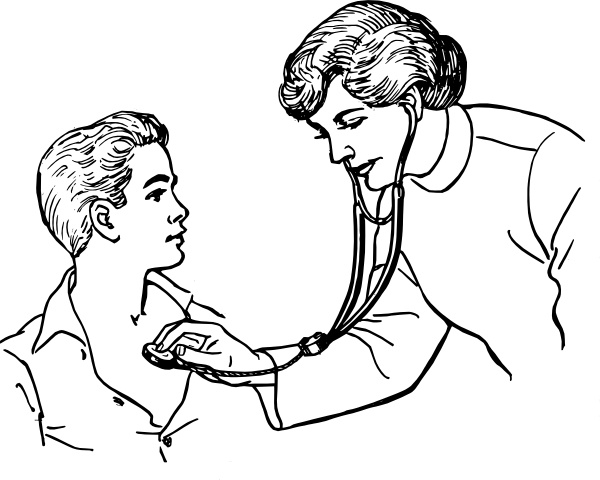
It does appear that those days when your community doc would look at your hands, listen to your heartbeat galloping along, asks you to stick your tongue out and say ‘ah‘, checks your eyes and inquires about your bowels whilst palpating your tummy and so on have become history.
As I get along in age, the realization that visiting hospitals these days is no longer like my mother whisking me over to Dr. Ndukwe’s familiar consultation room, armed with her magical purse that contained all our medical cards and other mysterious objects, makes me not only sad about the golden times past but has also left me wondering how one can truly afford medical care in these times. It’s not as if any reasonable insurance is the most affordable thing in these parts.
It becomes steadily clear that with fewer overworked doctors and far more patients to see, your visit to see the doc might very well be a rushed affair that leaves you more perplexed than when you arrived. You are most likely not going to get a lollipop and a pat on the back and you will also be out of pocket if the visits become too frequent as you will have to pay for consultation fee and for other costs that pop out of the woodwork.
Truly, we need to take control of our bodies and have our own ‘where there is no doctor,’ sitting on our shelves. What’s your go to home remedy for aches and pains? Please feel free to share. You might be saving someone a lot of pain.
We often sit around waiting for big moments, big shifts in perspective, big things to happen, failing to understand that these little moments, these little shifts and these small things of these days are most certainly the big ones.
Don’t forget to make each day count. Look back on your day, reflect before you bed down for the night and think of at least five things that made your day brighter.
Most of us who have hit 40 and beyond have most times become hardwired in our ways that change does not come easy and is often worse than pulling teeth, however, if we fail to embrace change both internally and externally we will slowly decay, grow out of touch with times and very well become stubborn, doddering old coots.
Some may say that after all, we are not going to live forever nor get out here alive – they do have a point – so why bother to keep up with change? There are boundless reasons why change is not only good for your body and soul, your mental health, your business – whatever that may be – and it may not only elongate your life but perhaps make your life more interesting and ‘you’ a less of a stubborn doddering old coot 😉
We know that change is constant and even when we don’t seek it, it is thrust on us that we are not left much choice; you either fight it to a bitter finish, or you embrace it with flourish. The choice is yours.
The many benefits derived from change range from:
Personal growth: you will learn new things, discover new insights and perspectives every time you experience some change. Sometimes the outcomes and lessons learned may not be your initial expectation and could be much better.
Improvements: No situation in our life improves by itself without making the necessary adjustments; be it our finances, health, job, relationship, home…We need to take those vital steps required to improve that circumstance that we are struggling with because without making the effort things will continue to stagnate.
Life values: Mere looking at the present conditions of our existence and how a pandemic has made most people reevaluate their lives and reinforce those important life values is an easy example. From time to time we need to assess our values.
Flexibility: Embracing change helps us adapt easily to new situations and even thrive whilst at it. We become far more supple.
Ripple effect: Making big changes in one swoop is extremely difficult, but taking those little steps of change surely lead to bigger ones and hopefully better results.
Strength: A lot of change comes with attendant challenges and overcoming them only makes us tougher.
Progress: Progress is the child of change. Your vehicle will most certainly not move forward when the gear is constantly in neutral. To get where you want to be, be prepared to change the gear and move forward.
Opportunities: Change brings opportunities – both expected and unexpected – and they could present you more fulfilment, happiness and growth. To illustrate, nearly two years ago I flipped my career pursuit and started a journey in the educational sector where I started out teaching French in a new school here in the UAE and within a short space of time, I was promoted to a head of the section. My initial goal was to keep my French sharp and not lose it the way I have lost speaking Spanish, here I am now, not knowing for sure where the ride is going but enjoying it and hoping to make the best of it all the way.
Exciting New beginnings: Change brings that much-desired excitement that we need in our lives. It puts a spring in your step when you close a chapter that should have been closed way back and open a new one that leads to greater things.
A more interesting life: What would life be when it becomes one monotonous, boring and uninteresting routine? As dull as dishwater. Resist that temptation to stick to predictability all the time and aim to initiate little self-evolving steps of change that will lead you where you need to be.





 a cooking pot and twisted tales